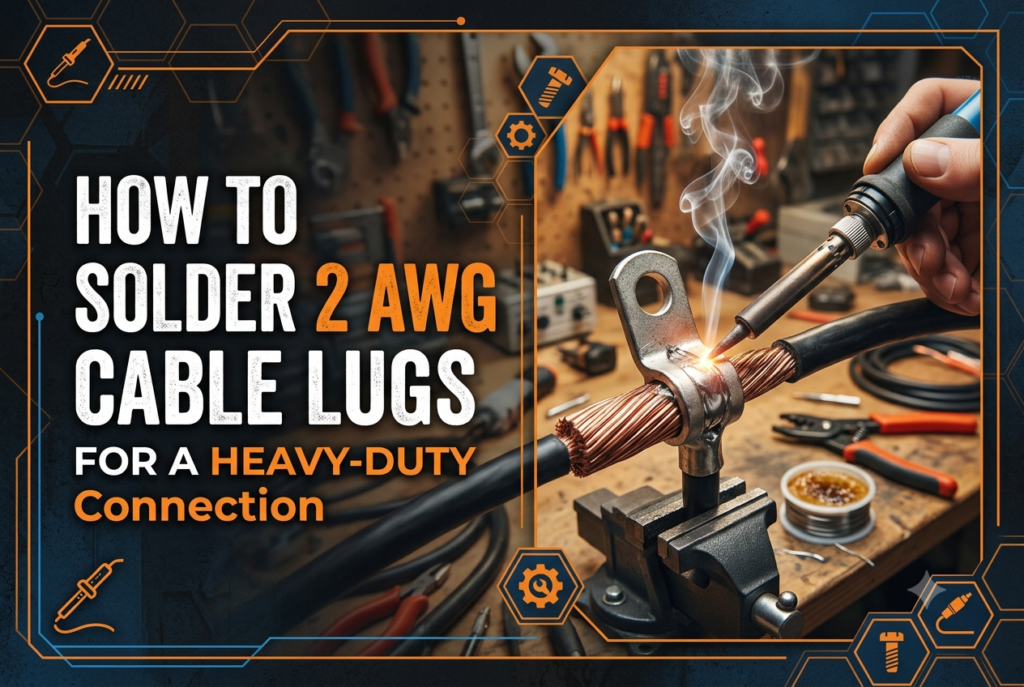
Creating a reliable, heavy-duty electrical connection requires more than just twisting wires together; it demands a solid mechanical and electrical bond. When dealing with thick, high-amperage wiring—such as in automotive applications, solar power setups, or inverter installations—soldering is an excellent method to ensure minimal resistance and maximum durability. Soldering heavy wire prevents oxidation over time and maintains high conductivity.
To achieve a professional-grade connection, you need the right technique, particularly when working with heavy-duty components like 2 awg cable lugs. Because thick copper wire acts as a massive heat sink, standard soldering irons simply will not cut it. You need a dedicated plan of action, proper safety gear, and specific tools to get the job done right.
Tools and Materials Needed
Before you begin, gather all necessary equipment to ensure a smooth, uninterrupted workflow:
- 2 AWG Copper Cable: Ensure the wire is stripped to expose clean, bare copper strands.
- Heavy-Duty Lugs: High-quality 2 awg cable lugs or a 2 gauge terminal lug made of heavy-duty, tin-plated copper.
- Heat Source: A high-wattage soldering iron (at least 200W–300W), a propane/butane torch, or a specialized induction soldering tool.
- Solder: Rosin-core lead-free or 60/40 leaded electrical solder. Avoid plumbing solder, as its flux is too corrosive for electrical applications.
- Flux: A liquid or paste electrical soldering flux to clean the copper and promote solder flow.
- Heat Shrink Tubing: Polyolefin heat-shrink tubing (preferably adhesive-lined) to seal and insulate the connection.
- Safety Gear: Heat-resistant gloves, safety glasses, and a well-ventilated workspace.
- Holding Tools: A heavy-duty vice or locking pliers to secure the lug and cable while hot.
Step-by-Step Soldering Process
1. Measure and Strip the Cable
Start by determining how much insulation needs to be removed from your 2 AWG cable. Hold the cable against the back of the lug barrel to gauge the depth. Using a sharp wire stripper or utility knife, carefully score and strip the insulation, taking care not to nick or cut the individual copper strands. If the exposed strands are dull or dark, use a wire brush or sandpaper to clean them until they shine brightly. Bare, bright copper is essential for a strong solder joint.
2. Pre-Tin the Wires
Pre-tinning is a crucial step that ensures the inner strands bond perfectly with the lug. Dip the stripped, bare copper strands into your soldering flux. Secure the cable pointing upward in a vice. Apply heat to the strands using your torch or iron, and feed solder into the bundle. Allow the molten solder to wick into the gaps between the strands until they are thoroughly coated but not dripping with excess solder.
3. Secure the Lug
Place the 2 gauge terminal lug into a vice or use locking pliers to hold it firmly in a stable, upright position. The barrel of the lug should be facing upward so it can act as a small cup to hold the molten solder. Ensure the surrounding area is clear of flammable materials, as the torch will generate significant heat.
4. Heat the Lug and Add Solder
Position your torch flame directly onto the bottom and sides of the lug barrel. Heavy copper lugs take time to heat up, so be patient. Apply flux inside the barrel. Once the lug is hot enough to melt solder on contact—test it by touching the solder to the inside of the barrel—feed the solder directly into the barrel until it is about one-third to half full. The heat from the lug will keep the solder liquid.
5. Insert the Cable
While keeping the heat applied to the lug, slowly and steadily push your pre-tinned 2 AWG cable down into the barrel of the lug. The cable should displace the liquid solder, causing it to rise slightly up the sides. Ensure the cable is pushed all the way to the bottom of the barrel so that all strands are fully immersed.
6. Let It Cool Without Disturbance
Remove the heat source immediately once the cable is fully seated. Hold the cable completely still and vertical. It is critical that the connection does not move or jiggle while the solder transitions from liquid to solid. Any movement during this cooling phase will result in a “cold joint,” which is brittle, highly resistive, and prone to failure. The cooling process should take about one to two minutes depending on ambient temperature. A properly cooled joint will look shiny and smooth, not frosty or grainy.
Inspection and Insulation
Once the metal is completely cool to the touch, inspect your work. Give the cable and lug a firm tug to ensure they are physically fused. Visually inspect the joint to confirm that the solder wetted both the inside of the lug and the outside of the wire strands. If you notice any exposed strands or gaps, you may need to reheat the joint and add a small amount of additional solder and flux.
Next, slide your adhesive-lined heat-shrink tubing over the joint so that it covers the transition point between the lug barrel and the cable insulation. Using a heat gun, apply heat evenly around the tubing, starting from the center and working your way outward. The heat-shrink will conform tightly to the shape of the connection, and the internal adhesive will melt to create a waterproof, dustproof seal that prevents future corrosion and strain.
Conclusion
Soldering heavy-gauge electrical connections is a straightforward process provided you manage heat correctly and prioritize safety. By taking the time to properly prep the bare copper, tin the strands, and secure a solid thermal bond using a premium 2 gauge terminal lug, you ensure that your high-amperage electrical system operates safely, efficiently, and without voltage drops. With these techniques mastered, your custom heavy-duty cables will withstand rigorous mechanical stress and harsh environmental conditions for years to come.